
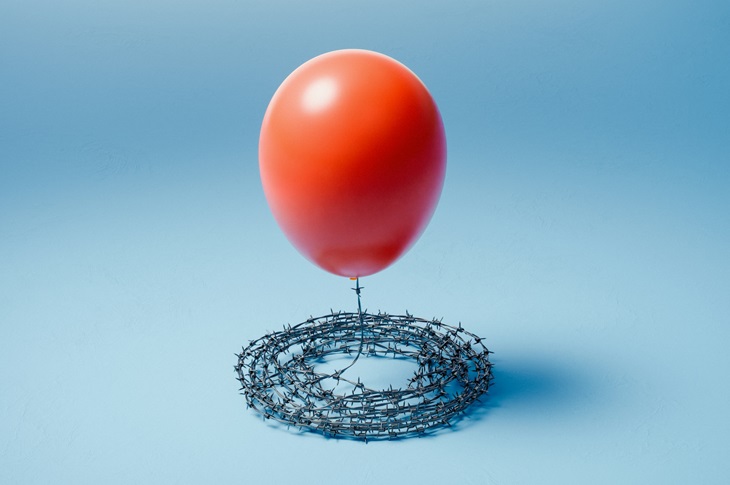
You want a change. You’re tired of things being hard, dramatic, or boring. Like when you’re so tired of your job that you need to spend the first 20 minutes after waking up convincing yourself to just get out of bed—and usually the only reason you do so is because you have bills to pay.
Maybe you crave adventure. Maybe you crave excitement. Maybe you crave something naughty. All you know right now is that you don’t want life to continue this way.
And then all of a sudden—a lifeline. A new job offer, a spontaneous trip, a new relationship in the making. You get really excited… and then you start questioning everything.
“Is now really a good time to change job? I don’t like where I work, but at least it’s stable.”
“Do I really want to spend the money on this trip? What if an unexpected expense happens—my car, home repairs, job loss?”
“Starting a new relationship takes so much energy. I have to start dressing nice again, being on my best behavior, making room for someone else in my life. I’m not really happy being single, but at least I am free to do what I want.”
So you decide to turn down the job offer, adventure, or new relationship.
And that’s why you feel—and stay—stuck. Not because you’re lazy, but because it’s comfortable, even if it’s not pleasant. Comfortable like that worn out t-shirt with holes in the armpit that you keep wearing.
Here are five reasons why you may be stuck:
1. It protects you from failure.
If you don’t try, you can’t fail. It’s a flawless system, really. You get to keep your current situation and avoid the possibility of things going badly. The downside, of course, is that you also avoid the possibility of things going well.
There’s also a fear underneath this: if you try and fail, it could just be proof that you’re as pathetic, useless, and stupid as you think you are. Staying stuck allows you to sidestep that completely, even if it means settling for less than what you actually want.
2. It protects you from success.
Success sounds great in theory, but in practice it comes with expectations, pressure, and the need to maintain whatever you’ve achieved. It can change how others see you, and more importantly, how you see yourself.
Staying stuck keeps everything predictable. You don’t have to rise to a new level or deal with the discomfort of growing into something unfamiliar. It’s not exciting, but it is manageable.
3. It keeps you in your comfort zone.
Even if your current situation isn’t ideal, you understand it. You know how to navigate it, what to expect, and how to get through the day without too many surprises. It’s the same reason why we often rewatch TV shows and movies, go to the same places, and order the same food off the menu. No unpredictability, no surprises—just familiarity and control.
4. It helps you avoid uncomfortable emotions.
Change almost always comes with some degree of discomfort—self-doubt, anxiety, frustration, and even an existential crisis. Staying stuck lets you avoid most of that, at least in the short term.
The catch-22 is that those feelings don’t disappear; they just get replaced by dissatisfaction, which is what leads to the stuck feeling.
5. It gives you a ready-made excuse
When you’re stuck, there’s always a reason. It’s the timing, the circumstances, this other problem here, the need to “figure things out first.” Some of these reasons are valid, but they can also become a very convincing way to delay action indefinitely.
As long as the reason exists, you don’t have to make a move, and that can feel like a relief, even if it keeps you exactly where you are.
So how do you get unstuck?
What tends to work best is small shifts. Doing one thing differently, even if it feels slightly uncomfortable. Taking a step before you feel fully ready. Paying attention to when you default to what’s safe instead of what might actually move you forward.
Try something entirely new on the menu. Take one free course that could lead you to the field that you’re interested in but scared to pursue. Go on one date or to a singles event.
Remember, you don’t have to commit to it. Just try it out a few times. Don’t like it? Switch to something else.
It’s also helpful to stop treating discomfort as a sign that something is wrong. More often, it’s a signal that something is new. You don’t have to enjoy it, but you do have to tolerate it long enough for things to start changing.
That being said, know the difference between discomfort with newness and discomfort as a signal from your gut. The first feels like nervousness or self-doubt that settles once you get into it. The other tends to stick, creating a strong sense that something is off. Listen to that one. Like if you’re on a date and you’re getting the “ick” vibe.
Comfort keeps things predictable and manageable, but it also keeps things the same. Trying new stuff introduces uncertainty, but it also opens the door to something different, and maybe fun. So do you want to stay stuck or float into new waters?
Insightfully yours,
Queen D